What is a CMS in 2026? Mark Demeny on AI, Content Supply Chains, and the Future of Content Management

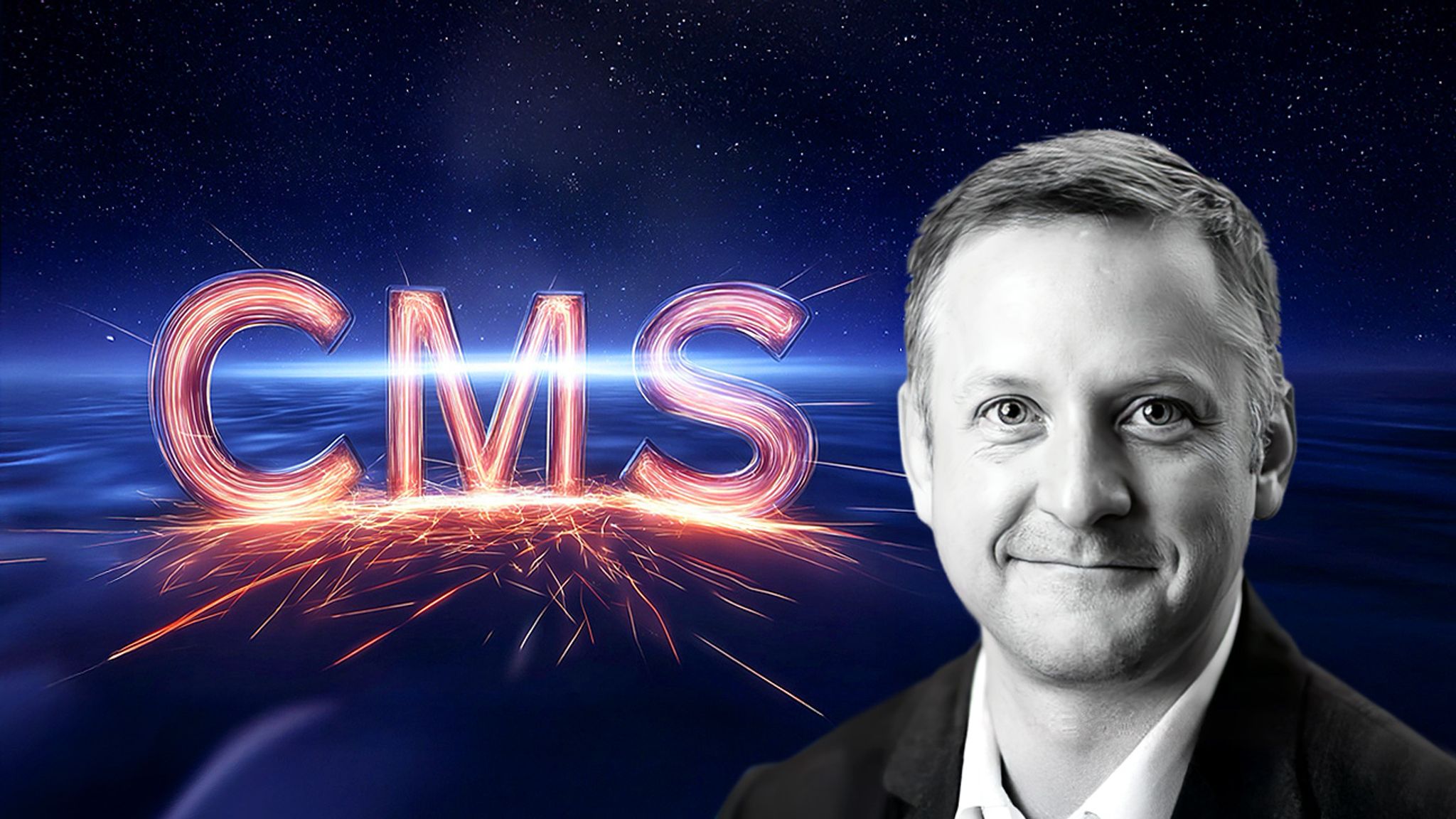
On the latest episode of “The Critic’s Corner” podcast, CMS luminary Mark Demeny joins us to explore how AI, composability, and shifting expectations are transforming content management, and how the emergence of the content supply chain might be the new center of gravity in an evolving ecosystem. We also discuss a forthcoming book he’s co-writing with Deane Barker.
Listen to the full episode of “The Critic's Corner” Podcast >
One of the best things about my Zoom calls with Mark Demeny is that I get to step into a familiar “geekeasy” environment – a creative lair, much like my own. The shelves behind him are densely packed with printed books, and the landscape is littered with sci-fi models and memorabilia.
While most of his Star Wars collectibles and Lego assemblages (my favorite) are out of direct camera range, I always feel the presence of the force. And rightly so: If there’s a Jedi Master in the cabal of content management, Mark achieved the mantle long ago in a galaxy far, far away.
But that legacy of experience is what gives him an unmatched wisdom into the contemporary challenges of our day. He understands the fundamentals, the foundations, the deeply-rooted truths about content modeling and governance that continue to be critical tenets of a CMS.
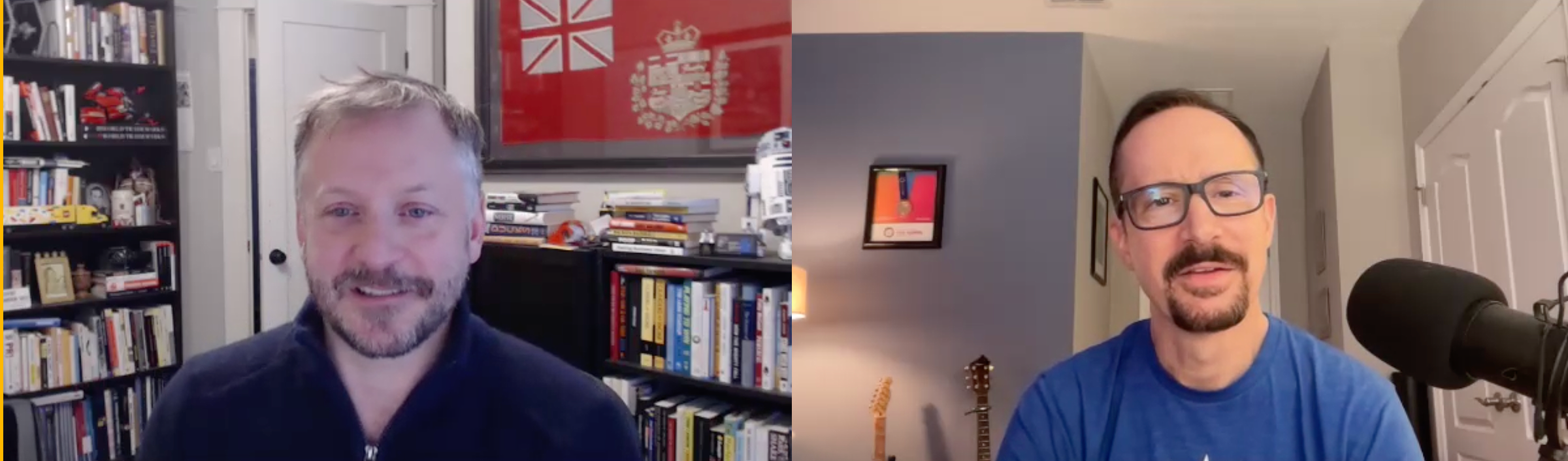
There's the droid you're looking for…
Of course, AI is crumbling some of the legacy keystones. Throughout 2025, we’ve seen significant change sweep across the content management category, with vendors embracing new acronyms and DXPs repositioning towards an agentic posture.
With so much AI-induced change rippling through the space, we’re left asking: What is a CMS in 2026? How will its role change in the agentic era? And most importantly, how will it continue to deliver value?
I invited Mark on our podcast, aiming for reflection and guidance from one of the leading minds in the field. Drawing on his deep resume of experience – including roles at Sitecore, Optimizely, Yext, and other top vendors on the map – he delivered sage insight to our conversation.
Against a backdrop of AI disruption, new DX buzzwords, and shifting buyer expectations, we unpacked how content management is being reshaped by a myriad of trends and market forces. Mark also brought a composable lens to his analysis, sharing some of his experience with the MACH Alliance and its continued focus on interoperability and the burgeoning topology of agentic AI.
We also explored a recent challenge to the perception of CMS as AI offers an alternative to SaaS and enterprise software, which was spurred by a LinkedIn post between Cursor (a popular AI code editor) and a few CMS vendors.
Was it marketing theater? Perhaps. But there were some interesting arguments surfacing in the echo chamber. We go deeper in the pod, and Mark reminds us of the importance of governance and trust when powering complex workloads – and why a proven CMS is still essential to the stack.
In the second half of the episode, Mark explains how the future of CMS lies with the “content supply chain,” and how this will require new thinking for editors and operators in the age of AI. We also get a preview of a new book he’s co-writing with fellow CMS luminary Deane Barker, aimed at helping practitioners navigate this shift from traditional web content management to AI-powered, system-level thinking.
There are no crystal balls to tell us what’s ahead, but Mark is as close to prescient as we can get. If you’re buying, building, or rethinking your CMS and DX strategies next year, this is a must-listen episode. Here's a snippet to whet your appetite:
Geeking out on Legos, composable, and the MACH Alliance
A self-proclaimed “composable software nerd” (to be clear, that’s not my opinion; the title is emblazoned on his LinkedIn profile), Mark has always thrived when immersed in technical challenges.
Case in point: when I interviewed him on CMS Critic back in 2023, he was at Uniform, slinging his magnum opus analysis of content management: a 63-page evaluation guide for understanding the core criteria for assessing vendor capabilities for composable stacks.
Building that guide was an epic journey, which we talked about at length. The level of detail was breathtaking, and as a result, he’s probably forgotten more about CMS than most of us will ever know. As such, he’s one of the most qualified people when it comes to analyzing the landscape.
Before diving into the nitty-gritty on the pod, we took a brief detour into that “geekeasy” I spoke of, discussing Mark’s long-running affectation for Legos. He's been a fan since childhood, and that fascination has persisted. In fact, during his MBA program, he turned to large, complex Lego sets as a sort of mental release valve.

Mark Demeny presenting at the Boye & Company CMS Connect in Montreal, August 2025. Source: Janus Boye/Seb Barre archive
Interestingly, the Lego brand occupies a duality in Mark’s universe. The Lego company has long been a proponent of MACH, leveraging solutions from its membership ecosystem across its stack. As a consultant for the Alliance, Mark has also seen the Lego used metaphorically, its component nature evoking the modular, interoperable nature of MACH technologies to work together. But he’s quick to point out that the analogy can be oversimplified.
“Composable isn’t just as easy as snapping things together,” he said. “You need to make them fit a little better.” That nuance – recognizing both the power of composability and the challenging realities of building a composable stack – is an important distinction. It’s also something I spoke about with Umbraco CEO Mats Persson in a recent webinar.
As of late, Mark has been entrenched in the MACH Alliance’s Open Data Model, an initiative that’s aimed at resolving persistent interoperability and integration challenges plaguing brands, SIs, and software vendors. As Mark noted, the model is designed to be lightweight, adaptable, and built for real-world applications.
“It’s less of a standard and more of a Rosetta Stone to say, ‘Here’s what a product looks like and how these things fit together,’” he observed.
Mark also explained how the Open Data Model includes recipes – reference patterns for composing entities and systems. These patterns are offered in both simple and high‑availability formats, and Mark touches on how these components are extensible across critical technology domains such as commerce, orchestration, and more.
What Is a CMS in the Age of AI?
As the locus of the podcast, we circled the key question of what a CMS is in this brave new era of agentic AI, and how it’s been evolving for some time. A lot of that has been reflective of the growing choices in the market, but Mark reminded me that content often begins outside the CMS – in Google Docs, Word, or even new AI‑driven tools like Adobe Franklin (now Edge Delivery Services) that provide connections to the broader authoring stack.
“The vast majority of content creation doesn’t actually start in your CMS,” he explained. “You’re going to start in Microsoft Word or Google Docs, and then bring that over in one form or another.”
As I mentioned, the recent LinkedIn scuffle was aimed at vendors experimenting with AI-assembled websites – even tossing out their headless CMS for AI-generated structures. Mark’s view is that this only works in narrow, low-governance scenarios.
“If you’re just making visual pages, then yeah, you might be able to use AI to build your sites,” he said. “But these would be fairly simple, with small amounts of content and limited use cases for regulatory compliance.”
Versioning, workflow, governance, and long-term control remain squarely in proven CMS territory – and will matter more as content, compliance, and AI collide with trust.
The rise of the ‘content supply chain’
The heart of the discussion was Mark’s argument that we’re moving from linear content management to more of a “content supply chain,” which brings both challenges and opportunities to bear.
As he noted, traditional CMS dealt in fundamentals like draft/edit/publish flows, with a couple of variants on the formula. Today, Mark said both ends of that pipeline are being pressured as inputs (systems, authors, AI tools) and outputs (channels, formats, audiences, journeys) continue to scale. Content operations is also being hamstrung by transformation into derivatives – social, for example – and tracking it all is becoming a growing challenge.
“If you think about content management in the past, it’s a fairly linear process,” he said. “What’s happening now is both ends of that process are getting extremely frayed.”
With the explosion in variants, versioning, and governance, Mark predicts that platforms will need more generic, multi-dimensional ways of storing and relating these variations so teams can understand provenance and relationships, audit what changed and why, and decide which variants to expand or retire based on performance.
As such, he sees an evolution in how content is being categorized and governed – encompassing everything from strategic to AI-generated derivatives. This supply chain will be concerned with how content is assembled, adapted, and orchestrated through multi-step workflows.
“In the AI CMS of the future, you want to be able to manage all of that as a set,” he said. “What stopped us in the past is that each one of those processes tended to have a human behind it, and that was a bottleneck. Now, with AI handling discrete, clearly‑defined steps, it becomes the domain of process design.”
“What I see a CMS person of the future becoming is not a ‘content manager,’ but a manager of the content supply chain, and that’s the set of processes that these transformations and adaptations and derivations are going to come from."
I asked Mark how this shift might affect the roles of CMS practitioners and content editors in the field. What will they be tasked with when handling the concerns of a content supply chain for a brand or enterprise – and how is AI impacting it?
“What I see a CMS person of the future becoming is not a ‘content manager,’ but a manager of the content supply chain, and that’s the set of processes that these transformations and adaptations and derivations are going to come from,” he said. “As you're publishing a product, your final outputs might be a version and a summary that's going to go on LinkedIn or a in Tweet. AI is pretty decent at taking something bigger and summarizing it or translating it. But AI really sucks at writing a white paper. So the more you can understand and break these up into smaller processes, the more you can have them work end to end.”
Will “content management” or even the CMS acronym disappear from our lexicon? Not yet. But as people start to view the function as a content supply chain, it might become more of an accurate descriptor – at least within larger organizations.
In Mark’s view, content supply chain “conductors” (for lack of a better job title) will do more than just own pages on a site. They’ll be mapping and governing multi-step content workflows, defining where AI is allowed to act, and establishing guardrails. They would also be responsible for connecting internal strategy – things like brand books, audience definitions, and buying stages – to explicit data and metadata that AI and systems can use.
“It’s things they’ve been doing already, but the tooling will be slightly different,” he explained, “and what you’re providing to those audiences and in what format will differ.”
With the rise of the “citizen developer” and “vibe coder” within organizations, the gap between strategist and technologist is also narrowing. Practitioners are getting comfortable with configuring processes and integrating systems, not just authoring copy. It's all manifesting in changes to the roles of the future – and how content management will be transformed from a systems-thinking perspective.
Writing the next playbook for content management
As I mentioned, Mark is co-authoring a new book with Deane Barker (author of O’Reilly’s seminal Web Content Management: Systems, Features, and Best Practices), hoping to provide an updated foundation of guidance for the content world. No small task, given the rate of change being exerted by AI.
While they’re keeping the title under wraps for now, Mark hinted that it will reflect the shift toward managing processes and supply chains of content in an AI‑driven world.
“We realized the underlying thinking around everything was probably going to change pretty substantially,” he said. “That fraying of all the different inputs, the multiplication of all the transformations, adaptations, and variations. And then all the different ways LLMs are going to be consuming stuff. But I think we've now finally got a good framework in place.”
During our recording, I had a chance to peruse the preliminary outline, which was all captured in GitHub using markdown – another nod to the convergence of disciplines and choosing the right tool for the job at hand. I asked Mark why that presented itself as the right vehicle for collaboration with Deane.
“There are some lovely technologies in GitHub,” he said. “Markdown is super friendly. The biggest benefit is providing that version history, which is really good for two people working together to review changes.”
I won’t give too much away, but there’s already enthusiasm and anticipation mounting for this book and how it could assist CMS buyers, implementers, practitioners, and vendors alike. It’s impossible to predict what new changes AI might exert on any software system, but Mark and Deane are shepherding a mental model for the future of CMS – and having two of the leading minds collaborating on this will be a benefit to the industry.
Mark has promised to keep us posted on the progress. Maybe on our next episode, we’ll have a working title to announce.
“The Critic’s Corner” podcast with Mark Demeny
Upcoming Events

CMS Kickoff 2026
January 13-14, 2026 – St. Petersburg, FL
Meet industry leaders at our fourth annual CMS Kickoff – the industry's premier global CMS event. Similar to a traditional kickoff, we reflect on recent trends and share stories from the frontlines. Additionally, we will delve into the current happenings and shed light on the future. Prepare for an unparalleled in-person CMS conference experience that will equip you to move things forward. This is an exclusive event – space is limited, so secure your tickets today.

Umbraco Codegarden 2026
June 10–11, 2026 – Copenhagen, DK
Join us in Copenhagen (or online) for the biggest Umbraco conference in the world – two full days of learning, genuine conversations, and the kind of inspiration that brings business leaders, developers, and digital creators together. Codegarden 2026 is packed with both business and tech content, from deep-dive workshops and advanced sessions to real-world case studies and strategy talks. You’ll leave with ideas, strategies, and knowledge you can put into practice immediately. Book your tickets today.